

Easy-to-grow
vegetables
Growing your own vegetables needn't be difficult – and, with the threat of rising food prices, now's an ideal time to try. Here are four suggestions for easy-to-grow veg
If you're worried about potential food shortages, or about the rising cost of fresh produce, now might be a good time to start growing some of your own vegetables.
Growing your own produce can save you money – and this is true even when the cost of food isn't spiralling. Vegetable seeds are often cheap to buy – from as little as 75p for a packet of salad leaf seeds, for example. You can save money on equipment by reusing plastic yoghurt pots and fruit trays to sow seeds in, or cutting up plastic milk bottles to create plant labels.
Growing your own vegetables can also cut your carbon footprint, as less energy, fuel and packaging are used to get the food to your plate. And you can enjoy organic fresh food that's free from pesticides and other chemicals.

You don't need a lot of space to grow your own food. Many crops can be grown in containers on a patio or balcony, or in a window box. You can even grow some food in hanging baskets, or on a sunny windowsill.
We've put together an easy-to-follow, 15-page guide to growing vegetables. It's designed for anyone new to kitchen gardening, or to use as a quick reference and checklist to keep your food production on track.
The guide focuses on 14 crops that are easy to grow – but here are four of them as a quick taster!
All of these crops can be sown in May or June.
Courgettes, pumpkins and squash
In May, sow courgette, pumpkin and squash seeds into small pots of compost – one seed per pot. Keep inside on a sunny windowsill, and water regularly. When seeds have germinated, the pots can be moved into a cold frame or greenhouse, if you have one.
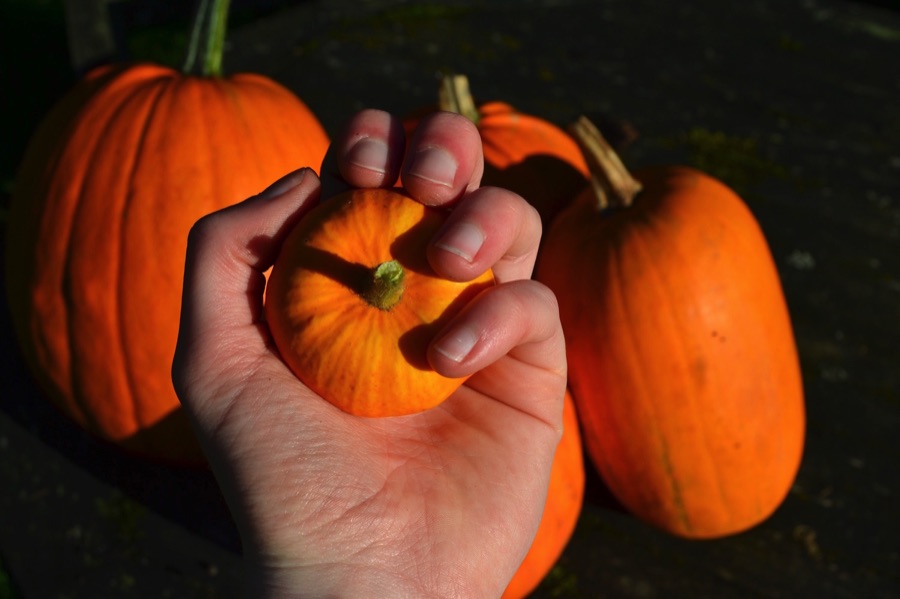
You can also sow seeds direct into the soil in late May or early June, after the last frost – although starting seeds off inside tends to produce more reliable results.
There are dozens of different pumpkin varieties to choose from – from tiny Baby Bear to medium-sized Small Sugar to huge Atlantic Giant – and squashes in all shapes, sizes and colours, including familiar butternut squashes. If you don't have lots of space, try growing a compact courgette variety, such as Midnight.
Towards the end of May, begin to 'harden off' the plants in preparation for planting out. To do this, bring them out of the house or greenhouse during the day, returning under cover at night. Do this for one week. Then leave them outside for 48 hours in their pots, before planting out in their final growing positions.
Plant courgettes 90cm apart, and pumpkins 90cm to 2m apart (this depends on the variety – large pumpkins such as Atlantic Giant need more space).
French Beans
Sow French beans in the same way as courgettes, in May, planting one seed into a small pot of compost. You can also sow French bean seeds direct into outside soil at the end of May or in early June.
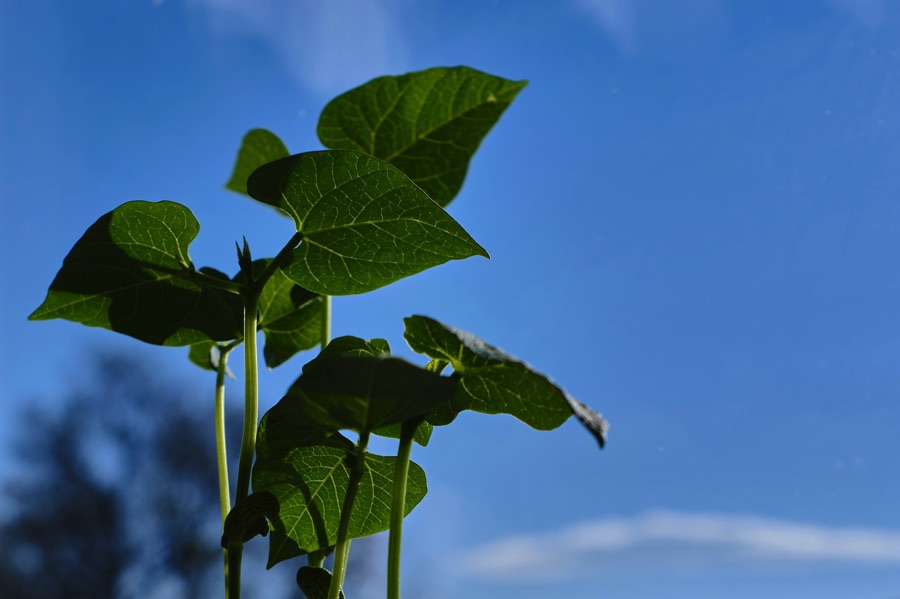
Bean plants. Photo by irfan Simsar on Unsplash
French beans can be dwarf or climbing. The climbing varieties will need something to climb up – so create a cone-shaped frame using bamboo canes. Insert eight canes into the soil in a circle, then tie them together at the top.
Plant one bean plant per pole. The beans should climb up the poles by themselves, but they sometimes need a bit of help to find the pole – do this by loosely tying the stem of the bean to the pole with some garden string. Climbing bean Blue Lake is one of our favourite varieties to grow, or try Cobra.
Dwarf beans don't need support – and these are a good choice when space is at a premium, or if you're growing in patio pots. Try Tendergeen – a reliable variety that produces heavy crops of beans.
Salad leaves
Salad leaf seeds can be sown in rows, blocks or circles. Sow seeds directly into the vegetable garden, or into patio pots.

To make circles of salad, take a large plant pot and press the rim into finely raked soil to form a circle. Sprinkle seeds into the circle, and cover lightly with compost. When choosing seeds, try a pack of mixed leaves, or lettuce varieties like Little Gem or Lollo Rosso. Continue to sow salad seeds every few weeks for a continuous supply of leaves.
Pea shoots
Pea seeds are cheap to buy – about a pound a packet – and they grow very quickly, producing plants that are ready to eat in around three weeks. You can grow pea shoots on a sunny windowsill at any time of the year.

To grow pea shoots, fill pots or trays with compost. You can reuse the plastic trays that strawberries and raspberries come in – these are ideal as they usually have holes in the base that prevent seeds from becoming waterlogged.
Use your finger to poke holes, about 2cm apart, in the compost, and pop a seed into each hole. Cover the seeds with more compost, water well, and place somewhere sunny.
When the plants are about 10cm tall they are ready to eat. Snip off the shoots just above the bottom set of leaves, and another shoot should grow.
Pea shoots are packed with vitamin C – essential for a healthy immune system. They have a delicate, pea-like flavour and a crisp, juicy texture, and are delicious in salads.
General plant care
Water all seeds and plants after sowing and transplanting. If the weather is dry, water all your crops by giving them a good soaking at least once a week. Crops in pots may need watering more frequently – so check these regularly to make sure the compost hasn't dried out.
Make sure all plants are labelled, and keep weeds under control with a hoe, or by pulling out by hand.
Avoid pesticides – these are harmful to all insects, including important pollinators such as bees. To keep unwanted insect populations in check without pesticides, attract insect-eating birds to your garden by providing water, shelter and nesting sites. Blue tits, for example, feed on aphids, and thrushes eat snails.
Beneficial insects can also help control pests – plant nectar-rich flowers to attract ladybirds, lacewings and other beneficial insects.

Little Green Space is a non-profit project sharing solutions to the nature and climate crises, and offering inspiration for a greener lifestyle. If you like our content, please help keep us going with a small donation!
Grow your own! An easy-to-follow guide to growing vegetables
This easy-to-follow, printable guide gives you all the information you need to produce your own tomatoes, potatoes, pumpkins, beans and more! Focusing on 14 vegetables that are straightforward to grow, this guide is ideal for anyone who is new to vegetable gardening. It's also suitable for school gardening groups, Scouts and Guides, community gardening groups and Transition Towns.
Buy the Little Green Space vegetable growing guide on Buy Me a Coffee for just £3
Ads/Affiliate links
Little Green Space May 2026